


Research Article :
Background: The intake of breakfast fuels the body with
essential nutrients needed for the optimal function and helping the brain to
concentrate during the day. Skipping breakfast puts the body at risking of
entering into a starvation mode, leading to compensate and overeat later in the
day. This current study was conducted between July 2019 and March 2020 at Ahfad
University for Women. The main
objective: To assess breakfast consumption pattern among the female
students of Health sciences, Department of Nutrition and Dietetics at Ahfad
University for Women in Sudan. Methodology:
An epidemiological, cross-sectional study was conducted at Ahfad University for
Women. A total of 100 students were selected by a stratified multi stage sample
technique. Data was collected by using close ended questionnaire and analyzed
by using SPSS (version 21). Results:
The results showed that 80% of the students skipped their breakfast. Reasons
for skipping their breakfast included lack of time to eat breakfast (32%), lack
of appetite (18%), financial constraints (16%), stress and family eating
patterns (6%), with only 2% mentioned they were following dietary regimen.
Statistically significant differences was found between the observed and
expected distributions of the sample regarding difficulties facing the students
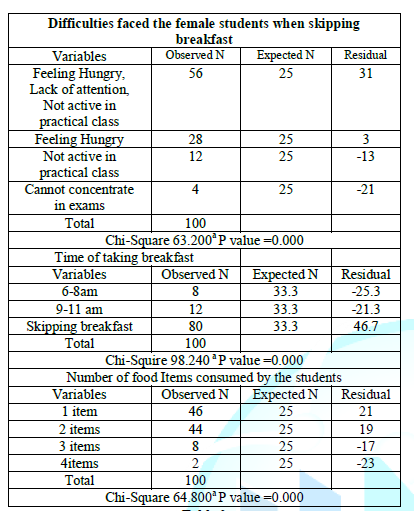
when skipping their breakfast (P=0.000), more than half of the students (n=56)
faced many difficulties when skipping their breakfast. These included feeling
hungry, lack of attention and being less active during their practical class.
Linear regression model revealed that when students’ pocket money increased,
some types of their food consumed increased by 90%. Conclusion: The study concluded that the majority of the student
skipped their breakfast and there was significant relationship between
students' pocket-money and types of food consumed in the breakfast meal. Recommendation: The study recommends
development of nutrition education program on the importance of breakfast meal
for the student’s health. Breakfast is thought to be the most important meal of the
day, which provides energy for the brain and improves learning capacity. It is
also known to contribute significantly to the total daily energy and nutrient
intake. Breakfast seems to provide an important source of nutrients including
carbohydrates which subsequently contributes to energy intake [1]. People who
consume breakfast have a better intake of essential macronutrients and
micronutrients, compared to those who skip breakfast. [2]. Moreover, the
consumption of breakfast leads to positive health behavior, improved stress
management, feeling energetic and making less unhealthy snack choices [3].
Conversely, the consequences of skipping breakfast include fatigue and
suboptimal concentration levels [4], as well as an increased risk for
developing obesity [3]. Breakfast is the meal that keeps a student active for many
hours prior to lunch meal break. Due to skipping of breakfast, students find
difficulty in attending their lectures and their cognitive power is impacted
which further leads to weak scholarly performance [5]. Those who either skip
breakfast or consume it infrequently have an increased risk of developing
metabolic syndrome [6]. Metabolic syndrome is a common medical condition,
comprising of a cluster of symptoms including abdominal obesity, hypertension,
dyslipidaemia and abnormal fasting blood glucose levels or insulin resistance [7].
Several reasons for skipping breakfast have been suggested
including financial constraints, habitual, unavailability of time to prepare
breakfast among others [8]. Study in Pakistani university revealed that, only
44.1% of female students consumed breakfast regularly [9], while at a Turkish
university, only 35.6% of students consumed breakfast daily [10]. The major
reason for students skipping breakfast is that of availability of time to eat
before the first lecture of the day, no appetite or oversleeping, and 15% of
the students stated financial reasons for skipping breakfast [4]. There were commonly reported reasons for students skipping
breakfast in multiple studies conducted worldwide. This includes: a lack of
appetite in the morning, a lack of time [11], do not like to eat too early,
waking up late [11], inadequate money to purchase food [4] and methods to lose
weight and there are multiple factors that influence the decision to omit
breakfast, particularly among university students, where the lack of breakfast
is only one of many poor dietary choices [12]. There is a lack of current data regarding the consumption or
skipping of breakfast, as well as the habitual foods or beverages that
constitute a typical breakfast amongst Sudanese university students. It was
observed that students skip breakfast meal or take it in late time which
contribute to many health problems. Skipping breakfast may lead to an increased
feeling of hunger, and thus to the consumption of larger portions in subsequent
meals during the day. To assess the breakfast consumption pattern among female
students of Health Sciences, Department of Nutrition and Dietetics at Ahfad
University for Women in Sudan. Sample Size The sample size was determined by
using the following formula. Total number of students in Health
sciences are 713 students =713/713*(0.05*0.05) +1= 256 Sample distribution A stratified multi stage sample technique is used to
distribute the sample among the students. A simple random sample technique was used
to select the School and the department Nutrition and Dietetics department was
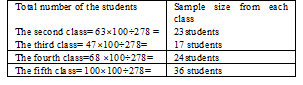
selected by simple random sample technique. Total number in the department = 278 student n=278×256 /713= 100 Sample size =100 Sample size from each class:
Number of students in each level X sample size÷ Number of
students in the department The
students were selected from each class by systematic random sample. The
sampling frame was designed (student lists) for class. The interval was
calculated as below. The first student in class was selected randomly then the
second student was selected by adding the interval and so forth till the sample
was selected: Interval = Total student in class ÷ Sample size Students in Department
of Nutrition &Dietetics (second year to fifth year) were included in study,
other schools and first year (University Preparatory Program) were excluded
from participating in the study. Data was collected by using close ended
questionnaire distributed and collected on the spot/face-to-face to the
students, 15 minutes were taken to fill the questionnaire from each student.
Questions were asked to assess the students consumption pattern, included
students’ age, their residency, pocket-money in Sudanese pounds, skipping
breakfast pattern, difficulties faced the students when skipping breakfast,
time of breakfast consumption, number of food items consumed by the students
and types of food items consumed in the breakfast time. Data was analyzed by
using SPSS (Statistical Package of Social Sciences, Version 21). Type of
analyses used were descriptive statistics in form of frequency, in addition to
chi-square test, cross tabulation, correlation and linear regression were used.
The study was conducted among female students studying at
Ahfad University for women, School of Health sciences, Department of Nutrition
and Dietetics, the number of the students in the present study was 100 and
their age group range between 16->20, 35% of the students lived in hostels,
61% with their family while only 4 of them were living with their relatives.
Students who skipped their breakfast were 80% while 49 % of the students
received pocket-money range between (50-100), only 2 of the students received
more than 300 SD, while 21 %stated that they did not receive Pocket-money. Table 2 shows, there were statistically
significant differences between the observed and expected distributions of the
sample regarding difficulties faced the students when skipping breakfast, time
of taking breakfast and number of food Items consumed by the students (P
value=.000).
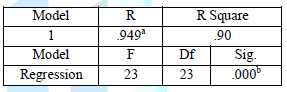
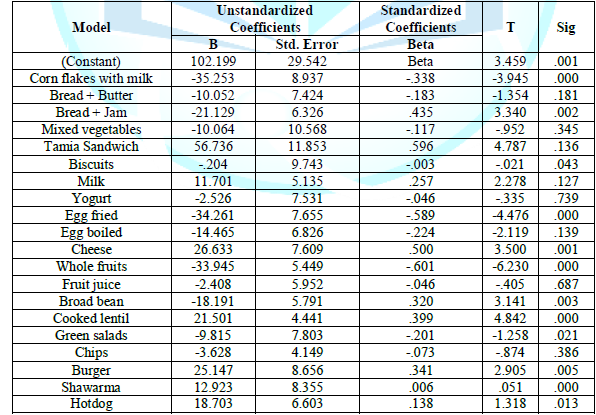
Leaner regression model in table (5) shows that R value is
0.949 which indicates the relationship between R square and the variables (with
value of 0.90) that provides the expected change with significance differences
(0.000). Pocket-money was the independent variable and type of food consumed
during breakfast was the dependent variables. Positive significant relationship
was detected between pocket-money and the following types of food: cheese,
cooked lentil, burger, shawarma and hotdog, (P value < 0.05). Negative relationship was also detected
between pocket-money and the following types of food, bread + Jam, corn flakes
with milk, biscuits. egg fried, green salads, Whole fruits and broad bean, (P value
<0.05) ,while no significant differences was detected between pocket- money
and other types of foods like, milk, bread + butter, mixed vegetable, chips,
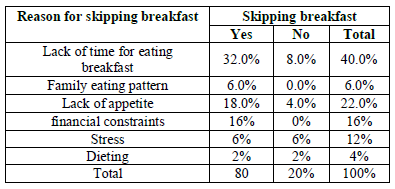
yogurt, fruit juice, milk tamia sandwich and egg boiled P=value > 0.05. Table 3: Correlation between reasons for skipping of breakfast and skipping of breakfast. Spearman Correlation value 0.80 sig 0.004). Significant
Correlation was found between reasons for skipping of breakfast and skipping of
breakfast. Lack of time for eating breakfast was stated by 32% of the students
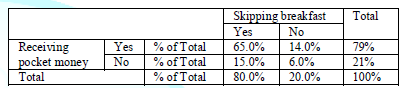
while only 2% were dieting. Table 4: Correlation between receiving pocket- money and skipping breakfast. Spear man correlation 0.11 P value=0.247. No
significant correlation was found between receiving pocket- money and skipping
breakfast. Table 5: Pocket-money and type of food consumed at breakfast meal. The present study revealed that the majority of the students
skipped their breakfast (table1). This result is higher than findings reported
in Iranian study where 52% of females at the University of Medical Sciences
skipped their breakfast [13], was also higher than previously reported in India
were the prevalence of breakfast skipping was 42.23% [11]. Furthermore, the
present study showed that more than half of the students faced many
difficulties when skipping breakfast such as feeling hungry, lack their
attention during classes and being inactive during practical class. Similar
findings were reported previously that students will not be able to pay
attention and accommodate their lessons in the class. It was reported that
taking breakfast regularly on it’s right time, improve alertness, ability to
concentrate and general feelings of happiness and wellbeing [14]. Regarding the
right time of taking breakfast, few students in the present study took their
breakfast between 6-8: am which is lower than result reported among south
African university students who commonly consumed their breakfast between 7:00
to 8:00 (43.6%; n=120) (p<0.05) and between 6:00 to 7:00 (28.7%; n=79)
(p<0.05 [16], which considers the right time of having breakfast. It was
observed that, people in Sudan take their breakfast very late, often at one
o’clock which is too late for taking breakfast meal. Almost half of the students in the present study consumed 1 item
in their breakfast. Studies indicated that one item might not provide all the
recommended nutrients needed by the body, it may only constitute one or two
nutrients and the students in this period of life need well balance meal with
variety of nutritious foods providing macronutrients for provision of energy
and micronutrients that protect them from many diseases. Reasons for not
consuming breakfast by the students in the present study, included, lack of
time to eat their breakfast, lack of appetite, financial constraints, stress,
family eating patterns and dieting. Lack of appetite in the morning and a lack
of time has been widely reported in previous studies [11]. It was observed that
most of Sudanese private university classes start lectures at 7:30 am and many
students live far away from the universities so they have to leave home early
to find transportation to arrive on time, moreover, there is no break between
the morning lectures in order to eat their breakfast. Furthermore, Pocket- money received by the students may be
insufficient for breakfast. In Sudan there is every day new prices for all food
commodities in groceries, supermarkets and restaurants. Merchants in Sudan are
free to determine the prices of their commodities, which negatively affect
people's income, and thus their health. In the present study Leaner regression
model revealed that when the pocket-money increased some types of food
increased, most of these foods were meat products. Consumption of meat products
like burger, hotdog or Shawarma among some of the students can be explained by
their better pocket-money, as meat (lamb, beef or poultry) is considered one of
the most expensive types of food in Sudan. When the pocket-money increased the
consumption of following types of food decreased, bread with jam, corn flakes
with milk, and biscuits. These types of food did not become an option for students
when their pocket-money increases. This is confirmed by previous study found
that, the cost of food as well as budget available to spend on food by students
plays a substantial role in food choices (Deliens, et al., 2014). In general,
the most popular breakfast items consumed among the students in Sudan are Broad
bean Tamia, and Chips, due to their availability and low prices. The study concluded that the majority of the students
skipping their breakfasts. Barriers to a healthy lifestyle and regular
breakfast consumption were identified in this study, time constraints and a
lack of appetite were the most reasons given for skipping breakfast. Significant
association was detected between pocket-money and various types of food
consumed by the students and there were statistically significant differences
between the observed and expected distributions of the sample regarding
difficulties faced the students when skipping breakfast, time of taking
breakfast and number of food Items consumed by the students.
The university environment should be supportive and
facilitative in promoting good diet and lifestyle practices. This could include
the structuring of lecture times such that students have a morning or
mid-morning break to eat and having healthy food options available at lower
cost as alternatives to unhealthy snacks, take away and vending. Development of
nutrition education program on the importance of breakfast meal for the
student’s health and further researches should include all students in the
Sudanese universities to determine breakfast consumption pattern and the
unhealthy effect of skipping breakfast. *Corresponding author: Somiya Gutbi Salim Mohammed, Associate Professor at
University of Bahri, Department of Public Health, College of Public and
Environmental Health, Khartoum North, Sudan, E-mail: Somiyagutbi@gmail.com
Citation:
Mohammed
SGL. Breakfast Consumption Patterns among the Students at
Ahfad University for Women (2020) Edelweiss
Appli Sci Tech 4: 33-37. Breakfast, Skipping, pocket-money, Food
consumption.Breakfast Consumption Patterns among the Students at Ahfad University for Women
Abstract
Full-Text
Introduction
Justification
General Objective
Methodology

Results

Discussion
Conclusion
Recommendation
References
Keywords
