Syed Imran, MS Moosabba and Alphonsa Ancheril
"font-size:8.0pt;line-height:115%;font-family:" times="" new="" roman","serif""="">
The diagnosis and the treatment for cancer are significant stressors for the
patients. It can affect physical as well as psychological well-being.
Variations in salivary amylase indicate physiological responses to the
stressful experience during chemotherapy. Music therapy is witnessed to
decrease psychosocial distress in the oncology setting. Listening to music can
positively benefit neurophysiologic and emotional responses as well as promote
relaxation, especially beneficial for cancer patients undergoing painful and
anxiety-inducing chemotherapy. It is, therefore nurses, who are so familiar
with this environment, not only to be aware of this anxiety-producing process
but to cope with it and to alleviate it for the patient as much as possible.
Objective:
The objective of the study was to determine the salivary amylase levels in
patients undergoing chemotherapy before and after listening to preferred music.
Design: Quasi-experimental repeated measure design. Setting; Experimental and
control group were recruited from two oncology units of selected multispecialty
hospitals. Participants: Purposive sampling techniques were used to select the
study participants. Patients of age group eighteen and above, undergoing first
time chemotherapy treatment and the chemotherapy infusion lasts for minimum of
3 hours duration was the inclusion criteria whereas Patients who were unable to
listen to music due to hearing problems, those who were with head and neck
cancer, diabetes, hypertension, and thyroid problems were excluded from the
study. 168 eligible participants were recruited among which 8 were unable to
continue.
Methods:
Saliva was collected from both the study groups before and after the
chemotherapy administration. The patient preferred instrumental music intervention
was administered for the duration of 3 hours during chemotherapy with the help
of mp3 player and musical pillow in the experimental group where the control
group had a routine oncology unit care and they were rested on a bed during the
chemotherapy administration. The post-tests were done on day 3 and day 5.
Results:
Significant changes in mean salivary amylase were observed in the experimental
group compared to the control group (p˂0.05). Repeated measure ANOVA also
showed a significant difference (p˂0.05) in the experimental group at different
time points of observation. There was a significant association between the
baseline amylase level and stage of cancer in both the experimental and control
group (p˂0.05).
Conclusion: Music was effective in patients undergoing
chemotherapy in terms of reduction in salivary amylase level.
Introduction
Patients undergoing cancer treatment may have
physical and psychological problems. Chemotherapy
is often considered the most stressful of the treatment modalities primarily as
a result of the myriad of side effects that the patient has to endure [1]. It
can affect the patient’s physical, psychological and spiritual well-being [2].
Salivary alpha-amylase is a useful biomarker that can be used in assessing human
psychobiological and social behavioral processes [3].
Assessment of pre-treatment anxiety is challenging
and mainly based on lengthy questionnaires or plasma biomarkers that cannot be
used for bedside decision-making. There is a potential role for noninvasive,
real-time, and point-of-care biomarkers such as salivary
amylase to identify anxious patients and to target pre-treatment
pharmacologic or non-pharmacologic interventions in patients undergoing
chemotherapy.
Salivary Amylase is the principal saliva protein and
is mainly secreted by the parotid
glands. An association between changes in Salivary Amylase during exposure
to a stressful stimulus and changes in blood nor-epinephrine or heart rate
variability indices strongly suggests that Salivary Amylase is an accurate
marker of sympathetic nervous system activity [4]. The purpose of this study
was to evaluate the effect of patients preferred music on levels of salivary
amylase before and after chemotherapy administration.
Material
and Methods
Quasi experimental repeated measure design was
adopted to conduct this study. The study was approved by the university ethics
committee (YUEC 155/2016).
Study
Participants
Patients with all types and all stages of cancer
were included in the study between the age group of 19-65. Oncology
units of two different hospitals were selected as one for experimental group
and another for control group. Patients who were 18 years of age or older, who
did not have hearing deficiencies and the chemotherapy infusion lasts for a
minimum of 3 hours duration was the inclusion criteria whereas patients who
were unable to listen to music due to hearing problems, who had head and neck
cancer and had diabetes,
hypertension, and thyroid
problems were excluded from the study. All patients were provided informed
consent and were informed that they could withdraw from the study at any time
[5-9].
Intervention
The music intervention included 10 different variety
of instrumental music library. Each library had slow, instrumental music
collections of 3 hours length which was recorded and stored in Sony portable
mp3 players. They were selected by the investigator as research demonstrates
them to be more relaxing. The selected music libraries were sent for the
validation to the experts in the field of music. The study participants first
selected one of the 10 libraries by listening to it, and then they were given
with Sony portable mp3 player with 3.5 mm port.
The study participants were also provided with
"sleep tune musical pillow" developed by Reliance comforts which had
two mini electronic speakers embedded in the pillow connected through a wire
with 3.5 mm jack. The benefit of using a pillow in this study was to make study
participants feel comfortable and to avoid keeping headphones for a long time
in the ears which is uncomfortable while undergoing chemotherapy. The pillow
covers were changeable and washable for infection control. The period of unsupervised
activity consisted of any activity that the patient desired [10-12].
Data
Collection Procedure
The baseline assessment of salivary amylase was done
on the 1st day before starting the chemotherapy. Music was
administered to the experimental group by following the protocol for 3 hours of
duration. The post-tests were done on day 1 i.e.; soon after the intervention
for the experimental group and after three hours of chemotherapy for the
control group. Post-tests were also done on, day 3 and day 5 for both the
groups [13-17].
Salivary
Amylase Assay
Salivary amylase Assay was carried out by following
the protocol provided by the AGAPPE
technologies, India.
Results
A total of 160 patients were included in the study.
80 were in intervention and 80 were in control group. The baseline and clinical
characteristics of the patients are presented in table 1. No differences were found between the groups in their
baseline characteristics.
Comparison
of Amylase Scores Over a Different Period of Time within the Experimental and
Control Groups
The data presented in table 2 shows that the salivary amylase level decreased within the
experimental (F=181.69, p˂0.001) group at different time points and slightly
increased in the control (F=5.68, p˂0.05) group. Further, post hoc analysis was
done by Bonferroni test to compare the effect between different times of
observation of amylase score. The data in the table 3, Post hoc analysis using Benferroni test shows significant
changes in mean difference over different time points in both the groups
(p˂0.05). Therefore, the null hypothesis is rejected and concluded that there
is a significant difference in the mean baseline and post test scores of
amylase in experimental and control group. The data in the table 4 shows that the salivary amylase levels decreased in the
experimental group from baseline (398.3 ± 108.9 IU/mL) to post-test day 5
(323.7 ± 106.9 IU/mL). However, in the control group, there was a slight
increase from baseline (386.1 ± 111.8 IU/mL) to post-test day 3 (389.6 ± 112.4
IU/mL) and day 5 (393.93 ± 111.7 IU/mL). Comparison of the salivary amylase
levels between the experimental and control groups showed a statistically
significant decrease (p˂0.01) on post-test day 3 and on day 5 (˂0.001). The
differences were not significant (p˃0.05) at baseline.
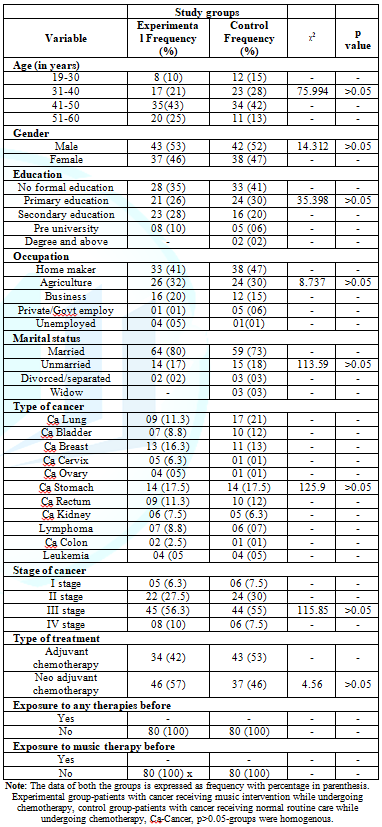
Table 1: Patient baseline and clinical characteristics.

Table 2: Amylases scores at different times of observations within experimental and control groups.

Table 3: Intragroup comparison of amylase scores at different times of observation in experimental and control groups.
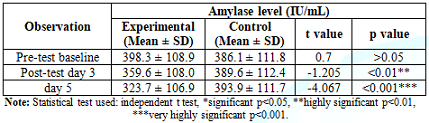
Table 4: Comparison of Salivary amylase scores between the experimental and control groups.
Discussion
The present study findings highlights that listening
to the patient preferred recorded music while receiving chemotherapy was
related with decrease in salivary alpha amylase level in patients with cancer
(p=0.001). this relation is confirmed with other study done by (Andreas
Charalambous, 2015) based on a randomized control trial, examine the effect of
progressive muscle relaxation and guided imagery along with music as anxiety
reducing intervention for patients with breast
cancer undergoing chemotherapy. Salivary cortisol and amylase levels were
assessed before and after intervention.
Conclusion
Present study result showed that there was a
significant difference in salivary amylase levels before and after chemotherapy
in experimental group compared to control group. Hence assessment of stress
provoking biomarkers like salivary amylase is important to assess the pre-treatment
induces anxiety and stress.
References
- Bilgic S and Acroglu R.
Effects of Listening to Music on the Comfort of Chemotherapy Patients (2017) West J Nurs Res 39: 745-762. https://doi.org/10.1177/0193945916660527
- Bareh S and D’silva F.
Effect of music on pain and quality of life among cancer survivors (2017) NUJHS
7: 25-29.
- Weaver C, Varvares M,
Ottenlips E, Christopher K and Dwiggins A. Live Music to Decrease Patient
Anxiety During Chemotherapy Treatments (2019) JNCCN 17: 19-58. https://doi.org/10.6004/jnccn.2018.7132
- Alacacioglu A, Dissiz
G, iris S, Usluoglu A and ASIK N. The Effect of Music on the Instant Anxiety
Levels of Oncologic Patients Receiving Chemotherapy Treatment (2018) Ann Oncol 29:
558. https://doi.org/10.1093/annonc/mdy296.003
- Bro ML, Johansen C,
Vuust P, Enggaard L, Himmelstrup B, et al. Effects of live music during
chemotherapy in lymphoma patients: a randomized, controlled, multi-center trial
(2019) Support Care Cancer 27: 3887-3896. https://doi.org/10.1007/s00520-019-04666-8
- Krishnaswamy P and Nair
S. Effect of music therapy on pain and anxiety levels of cancer patients: A
Pilots study (2016) Indian J Palliat Care 22: 307-311. https://doi.org/10.4103/0973-1075.185042
- Manson H, Manderin M
and Johnson M. Chemotherapy; thoughts and images of patients with cancer (1993)
Oncol Nurs Forum 20: 527-532.
- Alejandra J and Ferrer
MM. The effect of live music on decreasing anxiety in patients undergoing
chemotherapy treatment (2007) J Music Ther 15: 242-255. https://doi.org/10.1093/jmt/44.3.242
- Andreas C, Margarita G,
Evangelose b and Lefkios P. A randomized controlled trial for the effectiveness
of progressive muscle relaxation and guided imagery as anxiety reducing
interventions in breast and prostate cancer patients undergoing chemotherapy (2015)
Evid Based Complement Alternat Med 2: 1-7. https://doi.org/10.1155/2015/270876
- Rashkova MR, Ribagin LS
and Toneva NG. Correlation between salivary alpha-amylase and stress-related
anxiety (2012) Folia Med 54: 46-51. https://doi.org/10.2478/v10153-011-0088-4
- Robert MT, Dehoux M,
Longrois D and Guglielminotti J. Salivary Amylase as a Stress Biomarker (2015)
General Methods in Biomarker Research and their Applications 2015: 1-17. https://doi.org/10.1007/978-94-007-7740-8_31-1
- Kemper K and Danhauer
SC. Music as therapy (2005) Southern Med J 98: 282-288. https://doi.org/10.1097/01.SMJ.0000154773.11986.39
- Bulfone T, Quattrin R,
Zanotti R, Regattin L and Brusaferro S. Effectiveness of music therapy for
anxiety reduction in women with breast cancer in chemotherapy treatment (2009) Hosp
Nurs Pract 23: 238-242. https://doi.org/10.1097/hnp.0b013e3181aeceee
- Smith M, Casey L,
Johnson D, Gwede C and Riggn OZ. Music as a therapeutic intervention for
anxiety in patients receiving radiation therapy (2001) Oncol Nurs Forum 28: 855-862.
- Nightingale CL,
Rodriguez C and Carnaby G. The Impact of Music Interventions on Anxiety for
Adult Cancer Patients: A Meta-Analysis and Systematic Review (2013) Integr
Cancer Ther 12: 393-303. https://doi.org/10.1177/1534735413485817
- Jafari H, Zeydi AE,
Khani S, Esmaeili R and Soleimani A. The effects of listening to preferred
music on pain intensity after open heart surgery (2012) Iran J Nurs Midwifery
Res 17: 1-6.
- Chen LC, Wang TF, Shih
YN and Wu LJ. Fifteen-minute music intervention reduces pre-radiotherapy
anxiety in oncology patients (2013) Eur J Oncol Nurs 17: 436-441. https://doi.org/10.1016/j.ejon.2012.11.002
*Corresponding author:
Syed Imran, Yenepoya Nursing
College, Yenepoya University, India, E-mail: syed_vinu@yahoo.co.in
Citation:
Imran S,
Moosabba MS and Ancheril A. Effect of music on salivary amylase in patients
undergoing chemotherapy (2020) Edelweiss Psyi Open Access 4: 15-17.
Salivary amylase, Chemotherapy, Music therapy, Cancer
treatment, Anxiety, Oncology.