


Editorial :
Cheryl Ann Alexander and
Lidong Wang Innovation is the key to having a competitive edge
in the market. Success comes from not just new ideas, but improvements to old
ideas, and attracting new customers with new innovations. Innovations should
make the product stand out to the consumer. There are challenges and barriers
to innovations in the market. Innovations may be more expensive; therefore, it
may be less challenging to simply edit. Wearable sensors have a strong
potential for success in the market. Because this is the first sign of heart
attack, this is an easy and predictable method as to
identifying heart arrhythmias.
The purpose of this review is to determine if wearable sensors are effective at
notifying the patient and providers of cardiac
problems prior to an event. Many patients are not very
confident in the applications of new technologies such as wearable sensors.
This is a main reason that this study was done. Innovation
is a key toward success and winning over competition in the market. Not only
are new ideas brought about systematically, but also improvements to old ideas.
Effective management is required to manage innovation and attract new
customers. For gaining a new perspective and advantage over innovations, it is
important to have a widespread understanding of the product and the selling
nature. Product innovation management will be much more effective if
administration assigns a team to handle this process. It is also helpful to
managers to help identify, analyze, and understand strengths and weaknesses
[1]. An executive summary is the first step in this process. Consumer
expectations are more important than technology when implementing a new
product, whether global or continental. Innovative products require several
design elements which make the product stand out to consumers. Because
technology is moving quickly, companies must keep developing new items quickly.
But these items must appeal to the consumer, be cost-effective, and upgrade
technology [2]. That makes quality function deployment very important as this
process will help managers maximize customer satisfaction. Each customer
requirement satisfaction response is measured using a mathematical programming
method. Fuzzy sets are used frequently to measure input and output datasets
based on minimal technical difficulty, maximum customer satisfaction, and
minimum incremental cost [3]. Wearable
sensors have a strong potential for innovation in the global market. Already
widely used, wearable sensors are used in daily monitoring, well-being
management, and rehabilitation in both urban
and rural areas. Wearable sensors, specifically sensors which measure the heart rhythm, are extremely
valuable in cardiology services for
maintaining and diagnosing heart
dysrhythmia.
This can be helpful in diagnosing heart attack prior to a myocardial
infarction
because a dysrhythmia is one of the first silent symptoms of heart attack
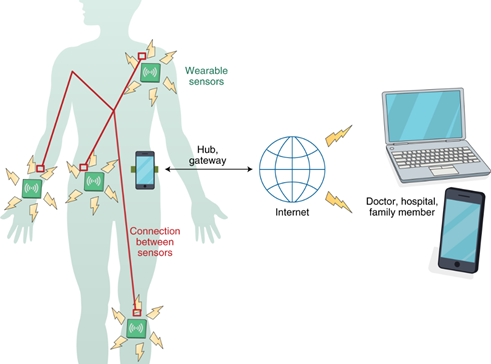
[4-6]. Figure1 shows the location of
potential sensors and the relationship between the wearables and providers,
family, and the Internet of Things (IoT). Some
Technologies Used in Healthcare Table 1: Some
technologies in healthcare. Challenges and
Barriers to Innovation • Challenge
one—finding concepts that reduce market uncertainty, and transformation of
value propositions in products and services. • Challenge
two—produce more value with less environmental impact affecting customer
choice. • Challenge
three—failing to handle all the factors involved in product innovation such as
stakeholders, functions, activities, product elements, supporting elements, and
service elements. • Challenge
four—innovation has been identified as the most elusive factor in
organizational processes and outcomes to be quantitatively and qualitatively
analyzed. New Product
Development (NPD)
should be considered carefully prior to making any plans because NPD is very
close to NPD and this needs to be carefully considered when looking at
challenges. And because NPD is estranged from NPP, this is called the fuzzy
front end of NPD and full of vagueness and imprecision. Because inherent
fuzziness, there is some express detail in application related to fuzziness
[3]. There
are also specific barriers to innovation delivery in other countries. Product innovativeness,
new and significantly improved features, and aesthetics can be valued in many
countries as necessary for an innovative product. Quality is the primary useful
feature looked for in a foreign country when an item is shipped, along with
cost [1,2]. However, certain barriers and solutions exist which include [2,8]: • Customer
senses and feelings are translated from qualitative information in Japan and
India, among other countries. • Japanese
buyers want attractive products and what is attractive to one person may not be
to another. • Varying
laws and regulations, tariffs, legislation regarding importation and exports,
etc., can affect new product entrepreneurship greatly and must be followed. • It
is also important to strengthen the innovation process based on the context of
innovation-based technology. Not all countries have the same laws or rules,
stakeholder interests, etc. Strategies to
Overcome Innovation Challenges Innovations,
with the creation of new ideas, help foster knowledge and newer ideas, and
enhance business performance. This should be done prior to advancing through
sales. Radical and recent needs indicate that innovation needs to grow now; new
ideas are mostly filled with challenges and barriers and should be controlled
with precision and radical thought [1]. Innovation
and new ideas can get caught up with varying tax laws, tariffs, and
state/provincial laws. A simple method of dealing with this issue is
entrepreneurship technology; gaining influence in the last few years, this is a
study of technology and entrepreneurship. However, little attention has been
paid to the innovation and entrepreneur relationship. There must be a
refinement, adjustment, and attention paid to innovation management. Discuss
the regulations required with the organizational leadership and this barrier
should be gone [8]. Several Criteria
for Innovation: ECG Strategy Figure
2: A new type of wearable which may replace older types. According
to Chen, Ko and Yeh, quality is the most important criteria to evaluate prior
to sending out an innovation; using a fuzzy numbers algorithm, evaluation is
generally carried out in linguistic terms [3]. Another important criterion for
evaluation is the strength of battery power. How long it lasts and how strong
it is belonging to both global and local areas. Companies want to evaluate how
long the battery lasts during continuous ECG monitoring, and this is a high
priority [5]. In Compression
System (CS)
technique, this significantly enhances any criterion which compresses the EKG
on the node, allowing reading and transmission with ultralow encoding
complexity. Today, sensor wearable garments with transmitters, measuring
different various physiological
measurements
[5]. This criterion is especially important when considering criteria for
global deployment [6]. Wearable sensors have compression sensors, so each have
a powerful number for bio-signal and changes the original signal into other
domains [4]. Because
globalization and rapid changes with enhanced customer service, most businesses
have been paying increasing attention to enhanced customer satisfaction, higher
profits, and gaining competitive advantage [1]. Customer satisfaction is
important to any business, driving demand, price, all market variables. To lose
sight of the vulnerability of a product based on price is ill-advised and can
destroy a company [8]. With
the advent of an innovation, there are several responsibilities, and they must
be handled. One method of handling challenges which may arise is the technology
entrepreneurship area, the product development area, and do not forget customer
satisfaction. Sometimes rules and regulations may vary from country to country
and rules and regulations vary so being prepared is always a good idea. Entrepreneur
technology
is also important because this is a newer method to examine barriers and
challenges by looking at technology as an entrepreneurial endeavor. Being
prepared for barriers and challenges, having an action plan for each allows the
organization to be prepared in advance for trouble and remove any obstacle to
an effective global deployment plan. Some barriers to globalization include
tariffs, laws, monies to be paid, but other barriers could include attraction
for customers, etc. Challenges are like barriers but present only a more
expansive problem such as customer wants and needs, produce innovations with
more value rather than economic impact, etc. ECG sensors are just one
innovation capable for global impact. Several plans for implementation can
include looking at the market, improving battery power, determining exactly is
necessary for globalization. With a combination of preparing for challenges and
barriers, looking for new innovations such as the ECG sensors, organizations
can prepare securely for entry into the global market. The
authors would like to thank Technology & Healthcare Solutions and the
Institute for IT Innovation and Smart Health for support. 1. Haleem
A, Kumar S and Luthra S. Flexible System Approach for Understanding Requisites
of Product Innovation Management (2018) Glo J flex Sys Man 19: 19-37. https://doi.org/10.1007/s40171-017-0171-7 2. Kang
X, Yang M, Wu Y and Ni B. Integrating Evaluation Grid Method and Fuzzy Quality
Function Deployment to New Product Development (2018) Math Prob Eng 1-15. https://doi-org.proxy1.ncu.edu/10.1155/2018/2451470 3. Chen
LH, Ko WC and Yeh FT. Approach based on fuzzy goal programing and quality
function deployment for new product planning (2017) Euro J Oper Res 259:
654-663. https://doi-org.proxy1.ncu.edu/10.1016/j.ejor.2016.10.028 4. Huang
H, Hu S and Sun Y. Energy-efficient ECG compression in wearable body sensor
network by leveraging empirical mode decomposition (2018) IEEE EMBS
International Conference on Biomedical & Health Informatics (BHI), United
States, pp. 1-4. https://doi.org/10.1109/BHI.2018.8333391 5. Zhang
J, Yu LZ, Gu Z, Li Y and Lin Z. Multichannel Electrocardiogram Reconstruction
in Wireless Body Sensor Networks Through Weighted $ell {1,2}$ Minimization
(2018) Instrum Meas 9: 2024-2034. https://doi.org/10.1109/TIM.2018.2811438 6. Rapin,
M. Wearable Sensors for Frequency-Multiplexed EIT and Multilead ECG Data
Acquisition (2019) Biomed Eng 3: 810. https://doi-org.proxy1.ncu.edu/10.1109/TBME.2018.2857199 7. Daim
TU, Tarman RT and Basoglu N. Exploring barriers to innovation diffusion in
health care service organizations: An issue for effective integration of
service architecture and information technologies (2008) In Proceedings of the
41st Annual Hawaii International Conference on System Sciences (HICSS 2008),
United States, pp. 7-10. https://doi.org/10.1109/HICSS.2008.159 8. Souza
M, Filho LDM, Bagno RB, Souza WC and Cheng LC. A Process Model Integrated to
Innovation Management Tools to Support Technology Entrepreneurship (2018)
Portland International Conference on Management of Engineering and Technology
(PICMET), United States. https://doi-rg.proxy1.ncu.edu/10.23919/PICMET.2018.8481921 9. Song
W, Ming X, Han Y, Xu Z and Wu Z. An integrative framework for innovation
management of product-service system (2015) Int J Production Res 53: 2252-2268.
https://doi-org.proxy1.ncu.edu/10.1080/00207543.2014.932929 Cheryl
Ann Alexander, Institute for IT Innovation and Smart Health, Mississippi, USA,
Email: cheryl@techhealthsolutions.org Alexander AC and
Wang L. EKG sensor pad innovation and strategy (2019) Nursing
and Health Care 4: 50-52. Innovation, Wearable, Wireless sensor, Arrhythmias.EKG Sensor Pad Innovation and Strategy
Full-Text
Abstract
Introduction
Customer
satisfaction is one premise for barriers. If the customer is not satisfied,
then the sale will not go through. Studies have applied fuzzy studies to
quality processes prior to transfer and, looking for a linguistic relationship
between quality and innovation, the outcomes were weak, strong, and moderate.
Fuzzy studies can also be used as nonlinear programming to aggregate each
individual contribution [3]. Some technologies that have been used in healthcare and are still
useful are shown in Table 1 [7].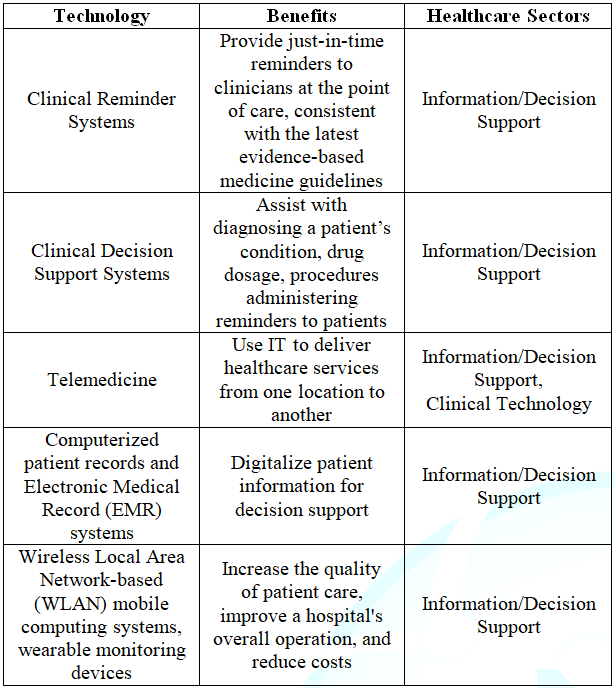
Challenges
and barriers exist for implementing new innovations to the market. Creation
must exist and start with concept development to reduce market uncertainties.
Exploration activities also seek the value extraction from and validation of
value propositions [8]. The market is a competitive strategy in a complex
pattern of products and services. There are few studies on how to manage Product-Service
Strategy
(PSS), and prior studies mainly concern the conceptual design. PSS is a complex
system of innovation management and for success, strategy, support, and tactics
are key [9]. Attractive
factors and features lead authors to do extensive research on products like
sensors. There are several hierarchal of features, the proposed integrative
method, and the fuzzy relationship matrix, which are included in global
challenges [2]. Listed below are several global and local challenges [1,8,9]:
Strategies
to overcome these challenges include a variety of actions. There are several
cycles in the life of a new product which includes about four theoretical
levels. The most critical cycle is transition; this cycle usually lasts
approximately 18-36 months. Transition implies the difference between a
start-up and a legitimatized business. Transition implies the following: rapid
growth and development, acquiring resources, establishing credibility and
legitimacy [8]. Sometimes
in innovation management, some parts are overlooked; strategic business model
design, reliability, and performance evaluation to name a few. Past PSS
developments haven’t provided a closed loop framework, and most provide only a
fraction of the problem. By assessing the whole innovation, there can be better
understanding of motives, etc. [9].
Wearable sensors have a strong
potential for innovation in the global market. Already widely used, wearable
sensors are used in daily monitoring, well-being
management,
and rehabilitation in both urban
and rural areas. Wearable sensors, specifically sensors which measure the heart
rhythm, are extremely valuable in cardiology services for maintaining and
diagnosing heart dysrhythmia. This can be helpful in diagnosing heart attack
prior to a myocardial
infarction
because a dysrhythmia is one of the first silent symptoms of heart attack
[4-6]. An innovative approach under discussion is about the Electrocardiograph
(ECG) sensor. Figure 2 depicts a new
type of wearable ECG sensor which may replace many older types of sensors
(biomed.net, 2019).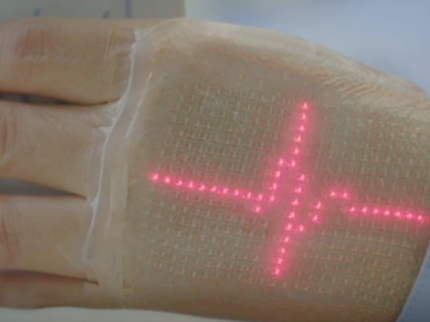
Conclusion
Acknowledgment
References
*Corresponding author
Citation
Keywords
