Introduction
U-74389G is a novel Lazaroid (L) antioxidant factor
implicating just only 261 published studies. The Ischemia Reperfusion
(IR) type of experiments is noted in 19.15% of these studies. A tissue
protective feature of U-74389G is obvious in these IR studies. The U-74389G
chemically known as
21-[4-(2,6-di-1-pyrrolidinyl-4-pyrimidinyl)-1-piperazinyl]-pregna-1,4,9(11)-triene-3,20-dione
maleate salt is an antioxidant complex, which prevents the lipid peroxidation
either iron-dependent, or arachidonic acid-induced one.
Animal kidney, liver, brain microvascular endothelial cells monolayers
and heart models are protected by U-74389G after IR injury. U-74389G also
attenuates the leukocytes; down-regulates the proinflammatory gene; treats the
endotoxin shock; produces cytokine; enhances the mononuclear immunity; protects
the endothelium and presents antishock property. 4 histologic variables in a Uterine Ischemia
Reperfusion (UIR) experiment were tested for this purpose. The two
variables were those of Endometrial Edema (EE) and Uterus Inflammation (UI)
which had a non-significant recessing potency at the without lesions grade
0.2636364 ± 0.14594051 (p-values=0.0698) since they were co-evaluated together
[1]. The other variables were those of Endometrial Karyorrhexis
(EK) and Uterus Congestion (UC) which had a non-significant recessing potency
at the without lesions grade 0.1253529 ± 0.08529668 (p-values=0.1373) since
they were co-evaluated together [2]. The present experimental work tried to
co-evaluate these EE, EK, UC and UI variables together and to end up to their
outcome totally, from the same rat induced UIR protocol. The paradox of this
study is that, taking into account two recessing studies, it yielded an
accentuating one concerning the histologic variables.
Materials and methods
Animal preparation
The study received 2 ethics committee approvals under the
3693/12-11- 2010 & 14/10-1-2012 numbers fully following the tenants of the
Declaration of Helsinki. The granting company, the experiment location and the Pathology
Department are mentioned in preliminary references [1,2]. The human animal care
of Albino female Wistar rats, the 7 days pre-experimental ad libitum diet, the
non-stop intra-experimental anesthesiologic techniques, the acidometry, the
electrocardiograms, the oxygen supply and the post-experimental euthanasia are
also described in preliminary references. Rats were 16-18 weeks old. They were
randomly assigned to four (4) groups consisted in N=10. The stage of 45 min
ischemia was common for all 4 groups. Afterwards, reperfusion of 60 min was
followed in group A; reperfusion of 120 min in group B; immediate L intravenous
(IV) administration and reperfusion of 60 min in group C; immediate L IV
administration and reperfusion of 120 min in group D. The dose height
assessment was described at preliminary studies as 10 mg/Kg body mass.
Ischemia was caused by laparotomic clamping the inferior
aorta over renal arteries with forceps for 45 min. The clamp removal was
restoring the inferior
aorta patency and reperfusion. After the blood flow interruption, the protocols
of UIR were applied, as described above for each experimental group. L was
administered at the time of reperfusion; through inferior vena cava catheter.
The EE, EK, UC and UI scores were determined at 60th
min of reperfusion (for A and C groups) and at 120th min of reperfusion (for B
and D groups). Relation was raised between animals mass with neither EE scores
(p-value=0.7779) nor with UI ones (p-values=0.0576), nor with EK scores
(p-value=0.8683) but only with UC ones (p-values=0.0047); hence the predicted
UC scores were used. The pathologic score grading was maintained the same as in
preliminary studies: (0-0.499) without lesions, (0.5-1.499) for mild lesions,
(1.5-2.499) for moderate lesions and (2.5-3) for serious lesions damage. The
paradox of this study is that, taking into account two recessing studies, it
yielded an accentuating one concerning the histologic variables.
Model of
ischemia-reperfusion injury
Control groups: The
20 control rats were the same for preliminaries and this study (Table 1).
Group A: Reperfusion
which lasted 60 min concerned 10 controls rats of combined EE, UI, EK and UC
Uterine Score (cUS) as the mean of EE & UI scores and the EK &
predicted UC ones.
Group B: Reperfusion
which lasted 120 min concerned 10 controls rats of combined EE, UI, EK and UC
Uterine Score (cUS) as the mean of EE & UI scores and the EK &
predicted UC ones.
L group: The 20
Epo rats were the same for preliminaries and this study.
Group C: Reperfusion
which lasted 60 min concerned 10 L rats of combined EE, UI, EK and UC Uterine
Score (cUS) as the mean of EE&UI scores and the EK & predicted UC ones.
Group D: Reperfusion
which lasted 120 min concerned 10 L rats of combined EE, UI, EK and UC Uterine
Score (cUS) as the mean of EE & UI scores and the EK & predicted UC
ones.
Statistical Analysis
Every cUS groups score was compared with each other from 3
remained groups applying Wilcoxon signed-rank test (Table 2). Then, the Generalized Linear Models (GLM) were applied
with dependent variable the cUS scores, and independent variables the L
administration or no, the reperfusion time and their interaction.
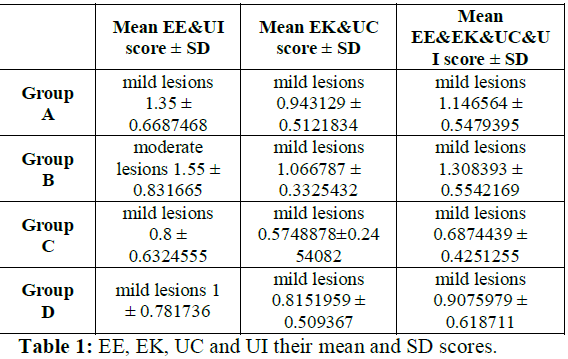
Table 1: EE, EK, UC and UI their mean and SD scores.
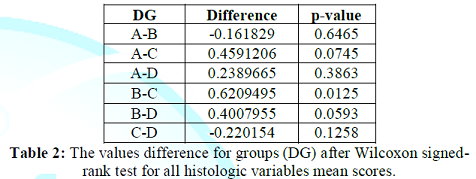
Table 2: The values difference for groups (DG) after Wilcoxon signed-rank test for all histologic variables mean scores.
Results
L administration non-significantly recessed the 4 histologic
variables within the without lesions alterations score 0.24361355 [-0.57263045-
-0.227816] (p-value=0.3830), after co-calculation by both Wilcoxon signed-rank
test and glm methods.
Contrary, reperfusion time non-significantly accentuated the
4 histologic variables within the without lesions alterations score 0.19002235
[-0.1554684 - +0.5355131] (p-value=0.2707), after co-calculation by the same
methods. Totally, L administration and reperfusion time together
non-significantly accentuated the 4 histologic variables within the without
lesions alterations score 0.0758471 [-0.1464624 - +0.2981566] (p-value=0.4940)
(Tables 3 and 4).
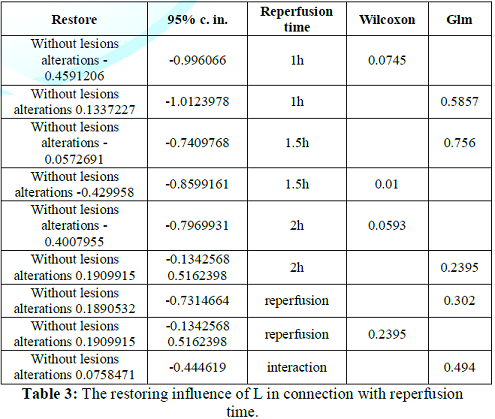
Table 3: The restoring influence of L in connection with reperfusion time.
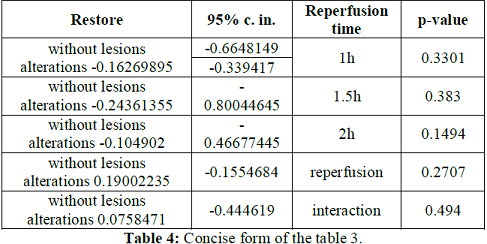
Table 4: Concise form of the table 3.
Discussion
Tsuji M, et al., consider UIR as one of the major causes of intrauterine/fetal
growth restriction, preterm birth, and low birth weight [3]. The offspring of
their Mild Intrauterine
Hypo-perfusion (MIUH) model clearly demonstrates long-lasting alterations
in neurological, neuroanatomical and behavioral test results. Ugurlu T, et al.,
showed that antioxidant acetyl L-carnitine that added to the organ preservation
solution (Post-Partum Hemorrhage) HTK, has prevented the formation of free
radicals and mitochondrial damage, thus protects the uterus that was stored in
short and long cold storage periods in female rats [4].
UIR is a complex pathophysiological process involved in hypoxia
and/or reoxygenation (UHR), ionic imbalance-induced edema and acidosis,
oxidative stress, mitochondrial uncoupling, coagulation and endothelium activation.
VEGFR-2 plays an important role in angiogenesis, chemotaxis, proliferation and
migration of endothelial cells. Sholapurkar SL, et al., proposed an ischemia
and mal-apposition hypothesis for Cesarean Scar (CS) niche, stating that the
surgical technique of uterine incision closure is the most important
determinant of CS defect formation [5]. Single-layer technique may be best reserved
for thin myometrial edges especially during repeat cesareans. Alotaibi M
suggested that a mechanism of uterine tolerance (preconditioning) is confined
to uterine tissues very close to labour and it is a protective phenomenon to
improve the uterine activity despite the long-lasting paradoxical metabolic
challenges that occur during the repeated strong labour contractions in rat
uterine term-pregnant tissues [6]. Ren Z, et al., showed that correcting
soluble fms-like tyrosine kinase-1 (sFlt-1)/Placental Growth Factor (PlGF)
imbalance by infusing PlGF reverses the decreases in vascular and
uteroplacental Matrix Metallo Proteinase (MMP)-2 and MMP-9 and the increases in
MMP-1, MMP-7, and collagen types I and IV induced by placental ischemia and
antiangiogenic sFlt-1 in hypertension of pregnancy [7].
Angiogenic factors and MMP modulators could rectify changes
in vascular and uteroplacental MMPs and collagen content and ameliorate
hypertension and intrauterine growth restriction in preeclampsia. Clayton AM,
et al., claims that placental ischemia, induced by Reducing Uterine Perfusion
Pressure (RUPP), leads to cerebral edema and increased blood-brain barrier
permeability and thus increased mortality risk from Alzheimers disease, stroke,
and cerebrovascular complications in women with a history of preeclampsia in
pregnancy [8]. Astrocyte number was increased in both regions but area covered
by astrocytes increased only in posterior cortex following RUPP. Posterior
cortical occludin was decreased. These results suggest that 2 months
postpartum, neuroinflammation, along with decreased occludin expression, may
partly explain posterior cortical edema in rats with history of placental
ischemia. Simoni M, et al., considered insufficient stem cell recruitment to
adequately repair the uterus resulting in conditions such as Asherman syndrome,
endometriosis and other endometrial receptivity defects [9].
In contrast, excessive recruitment of stem cells underlies
endometriosis. Further, the normal endometrium is a rich source of multipotent
stem cells that can be used for numerous applications in regenerative medicine
beyond reproduction. Stem-cell mobilization inhibiting may also be helpful in endometriosis
therapy. Almohanna AM, et al., suggested what may be general mechanisms of conditioning
occurring in all smooth muscles and tabulated tissue-specific mechanistic
findings [10]. Kisu I, et al., achieved the first delivery after autologous
uterus transplantation (UTx) in primates and the first periodic recovery of
menstruation after allogeneic UTx in nonhuman primate models [11]. In addition,
more validation in nonhuman primate models is needed for resolution of medical
issues and further development of UTx in humans, despite clinical application
of UTx in several countries. Vaka VR, et al., found mitochondrial ROS
significantly elevated in endothelial cells incubated with RUPP serum compared
with normal ones [12].
Impaired mitochondrial function and vascular, placental, and
renal mitochondrial ROS play an important role in hypertension and reduced
fetal weight in response to placental ischemia during pregnancy in female pregnant
Sprague Dawley rats. Koizumi N, et al., submitted a 41-year-old woman [13]. In
an elective needlescopic operation using 2- and 3-mm instruments after bowel
decompression out of right broad ligament hernia. The
defect in the right broad ligament was closed with sutures and she was
discharged 2 days after the operation. In the treatment of broad ligament
hernia without bowel ischemia, neither an abdominal incision nor any energy
devices are required. Needle scopic operation seems to be a promising approach
among minimally invasive operations. Kopko J, et al., found intra-operatively acute appendicitis and
levorotation of the pregnant uterus at 19th week of gestation by about 100
degrees [14].
As the signs of ischemia were absent, the uterus was
returned into its normal position. The patient underwent cesarean section at 36
weeks of pregnancy due to early leakage of amniotic fluid and failure to
progress during first stage of labor. Padma AM, et al., distinguished
reperfusion injury-related differences associated with organ preservation; that
may lead to improved human uterus transplantation protocols curing women with
uterine factor infertility. A much faster and severe reperfusion damage of all
uterine layers during the reperfusion experiment was got evident following 48
hours of cold ischemia [15]. This was indicated by major accumulation of
extracellular fluid, presence of apoptotic-labeled glandular epithelial layer
and vascular endothelium. A significant accumulation of lactate was measured in
the perfusate with a subsequent decrease in pH in a novel ex vivo sheep uterus
model. Chen C, et al., assessed the safety and efficacy of Transcatheter
Arterial Embolization (TAE) of the Inferior Mesenteric Artery
(IMA) for the management of Post-Partum Hemorrhage (PPH) [16].
Bleeding from the IMA should be suspected when there is
persistent vaginal bleeding after sufficient embolization of bleeders from the
bilateral iliac arteries. Saat N, et al., indicated that melatonin improved
fertility and reduced uterine torsion related tissue damage and that its
application during torsion was more effective than application following
removal of torsion in pregnant rats [17]. Tardieu A, et al., demonstrated
hypoxia-associated degradation of the organ by the significantly higher lactate
levels, accompanied by cell lysis and significantly higher levels of creatine
kinase activity (p<0.05) [18]. The metabolic results indicate a significant
degradation of the uterus during 24 h of Cold Ischemia (CI) before
transplantation in explanted ewes uteri. Tardieu A, et al., calculated the mean
CI time in studies of births from uteri obtained from live donors between 2 h
47 min and 6 h 20 min from a deceased donor; with only one birth in this case
in women [19].
Muscle
contractions have also been demonstrated in myometrial samples from women,
after six or more hours of CI. The uterus seems to be able to tolerate a
prolonged period of CI, of at least six hours; for the development of UTx,
particularly for procedures using grafts from deceased donors. Along with other
authors, we believe that the initial step resulting in uterine damage is an
acute increase in lipid peroxidation following ischemia, which damages
endometrium and other myometrial cells that ultimately induce their own apoptosis.
In theory, high levels of lipid peroxidation are decreased over the course of
reperfusion. During this time, either the cells may be destroyed via apoptosis
or they remain alive but show signs of damage such as the 4
Mentioned histologic features if oxidative damage is not
intense enough. We hypothesize that lipid peroxidation may
decrease following an oxidative insult as the cell overcompensates its
antioxidant efforts to counteract such an insult. Despite this rigorous
antioxidant effort by the cells, the damage may be too great and continue its
course, and progressive destruction leads to the greatest loss observed at the
endpoints of reperfusion. A numeric evaluation of the L efficacies was provided
by a meta-analysis of 35 seric variables of complete blood count and blood chemistry tests
versus reperfusion time coming from the same experimental setting [20]
(Table 5).

Table 5: The L influence (+SD) on the levels of 35 seric variables of complete blood count and blood chemistry tests versus reperfusion (rep) time20.
Conclusion
L administration non-significantly accentuated the 4
histologic variables within the without lesions alterations score 0.0758471
[-0.1464624 - +0.2981566] (p-value=0.4940) disputing for beneficial usage in
obstetric situations such as intrauterine/fetal growth restriction, preterm
birth, hypertension, low/reduced fetal weight due to placental ischemia,
uterine activity during the repeated strong labour contractions, preeclampsia, after
bowel decompression out of right broad ligament hernia or correction of a
rotated pregnant uterus, uterine torsion, post-partum hemorrhage and cesarean
scar niche formation.
Many gynecologic situations also could be benefited such as
endometriosis therapy, Asherman
syndrome, Alzheimers disease, stroke, posterior cortical edema and
cerebrovascular complications in women with a history of preeclampsia,
angiogenesis, chemotaxis, proliferation and migration of uterine endothelial
cells in regenerative medicine beyond reproduction and development of
autologous or allogeneic stored uterus transplantation protocols curing women
with uterine factor infertility.
References
- Τsompos C, Panoulis C,
Τοutouzas K, Triantafyllou A, Ζografos G, et al. The co-evaluation of
endometrial edema and uterus inflammation after the u-74389g effect on
uterine ischemia reperfusion injury (2017) J Contracept Stud 2:12. https://doi.org/10.21767/2471-9749.100039
- C. Tsompos, C. Panoulis,
K. Toutouzas, A. Triantafyllou, GC. Zografos, et al. The co-evaluation of
endometrial karyorrhexis and uterus congestion after the u-74389g effect
on uterine ischemia reperfusion injury (2018) EC Proteomics and
Bioinformatics 2: 65-68. https://doi.org/10.28982/josam.400277
- Tsuji M, Coq JO, Ogawa Y,
Yamamoto Y and Ohshima M. A rat model of mild intrauterine hypoperfusion
with microcoil stenosis (2018) J Vis Exp 131: e56723. https://doi.org/10.3791/56723
- Ugurlu T, Ozogul C,
Saribas GS, Gurgen SG, Akyol SN, et al. The effect of antioxidants on
angiogenesis in uterine transplantation (2018) J Obstet Gynaecol 38:
382-387. https://doi.org/10.1080/01443615.2017.1316250
- Sholapurkar SL. Etiology
of cesarean uterine scar defect (niche): detailed critical analysis of
hypotheses and prevention strategies and peritoneal closure debate (2018)
J Clin Med Res 10:166-173. https://doi.org/10.14740/jocmr3271w
- Alotaibi M. Brief hypoxic
cycles improve uterine contractile function after prolonged hypoxia in
term-pregnant but not in nonpregnant rats in vitro (2018) Theriogenology
113:73-77. https://doi.org/10.1016/j.theriogenology.2018.02.011
- Ren Z, Cui N, Zhu MA and
Khalil RA. Placental growth factor reverses decreased vascular and
uteroplacental MMP-2 and MP-9 and increased MMP-1 and MMP-7 and collagen
types I and IV in hypertensive pregnancy (2018) Am J Physiol Heart Circ
Physiol 315:H33-H47. https://doi.org/10.1152/ajpheart.00045.2018
- Clayton AM, Shao Q, Paauw
ND, Giambrone AB, Granger JP, et al. Postpartum increases in cerebral
edema and inflammation in response to placental ischemia during pregnancy
(2018) Brain Behav Immun 70: 376-389. https://doi.org/10.1016/j.bbi.2018.03.028
- Simoni M and Taylor HS.
Therapeutic strategies involving uterine stem cells in reproductive
medicine (2018) Curr Opin Obstet Gynecol 30:209-216.
- Almohanna AM and Wray S.
Hypoxic conditioning in blood vessels and smooth muscle tissues: effects
on function, mechanisms, and unknowns (2018) Am J Physiol Heart Circ
Physiol 315: H756-H770. https://doi.org/10.1152/ajpheart.00725.2017
- Kisu I, Banno K, Matoba Y,
Adachi M and Aoki D. Basic research on uterus transplantation in nonhuman
primates in Japan (2018) J Obstet Gynaecol Res 44:1871-1881. https://doi.org/10.1111/jog.13724
- Vaka VR, McMaster KM,
Cunningham MW Jr, Ibrahim T, Hazlewood R, et al. Role of mitochondrial
dysfunction and reactive oxygen species in mediating hypertension in the
reduced uterine perfusion pressure rat model of preeclampsia (2018)
Hypertension 72: 703-711. https://doi.org/10.1161/hypertensionaha.118.11290
- Koizumi N, Ariyoshi Y,
Fujiki H and Sakakura C. Needlescopic surgery for broad ligament hernia: A
case report (2019) Asian J Endosc Surg 12. https://doi.org/10.1111/ases.12692
- Kopko J, Stańczak R,
Warzecha D and Wielgos M. Uterine torsion in the second trimester of
pregnancy (2019) Neuro Endocrinol Lett 39: 423-426.
- Padma AM, Truong M,
Jar-Allah T, Song MJ, Oltean M, et al. The development of an extended
normothermic ex vivo reperfusion model of the sheep uterus to evaluate
organ quality after cold ischemia in relation to uterus transplantation
(2019) Acta Obstet Gynecol Scand 98: 1127-1138. https://doi.org/10.1111/aogs.13617
- Chen C, Chu HH, Shin JH,
Li HL, Ko HK, et al. Inferior mesenteric artery embolization for
persistent postpartum hemorrhage after sufficient bilateral iliac arteries
embolization: safety and efficacy in eight patients (2019) Br J Radiol
14:20180896. https://doi.org/10.1259/bjr.20180896
- Saat N, Risvanli A, Dogan
H, Onalan E, Akpolat N, et al. Effect of melatonin on torsion and
reperfusion induced pathogenesis of rat uterus(2019) Biotech Histochem
9:1-7. https://doi.org/10.1080/10520295.2019.1605456
- Tardieu A, Chazelas P,
Faye PA, Favreau F, Nadal-Desbarats L, et al. Changes in the metabolic
composition of storage solution with prolonged cold ischemia of the uterus
(2019) J Assist Reprod Genet 36: 1169–1178. https://doi.org/10.1007/s10815-019-01477-y
- Tardieu A, Dion L, Lavoué
V, Chazelas P, Marquet P, et al. The key role of warm and cold ischemia in
uterus transplantation: a review (2019) J Clin Med 8: E760. https://doi.org/10.3390/jcm8060760
- Tsompos C, Panoulis C,
Toutouzas K, Triantafyllou A, Zografos G, et al. The antioxidant drug u-74389g
effect on alanine aminotransferase levels (2017) J Anal Pharm Res 4:
00095. https://doi.org/10.2174/1871529x17666170201104158
*Corresponding
author:
Tsompos Constantinos, Department of Gynecology, General Hospital of
Thessaloniki St. Dimitrios, 2 Elenis Zografou street, Thessaloniki 54634,
Hellas, Greece, Tel: 00302313322171, Fax: 00302106811215, E-mail:
Tsomposconstantinos@gmail.com
Citation:
Τsompos C, Panoulis C, Τοutouzas K,
Triantafyllou A, Zografos CG, et al. The rat uterus after U-74389g process
(2019) Edel J Biomed Res Rev 1: 1-5.