Explore journal overview, editorial leadership, indexing, articles in press, latest published work, and highlights from previous issues.
ELISA- Enzyme-linked immunesorbent assay is a plate-based assay used for detecting and quantifying substances such as peptides, proteins, antibodies and hormones. It uses solid-phase enzyme immunoassay (EIA) to detect the presence of a ligand by using antibodies. It’s also known as analytical biochemistry assay.
Uses:
Ø Determination of antibodies
Ø Detect HIV (Human Immunodeficiency Virus)
Ø Check quality control in various industries.
In the simplest form of an ELISA, antigens from the sample are attached to a surface. Then, a matching antibody is applied over the surface so it can bind to the antigen. This antibody is may be an enzyme, and in the final step, a substance containing enzyme substrate is added. The subsequent reaction produces a detectable signal, most commonly a color change.
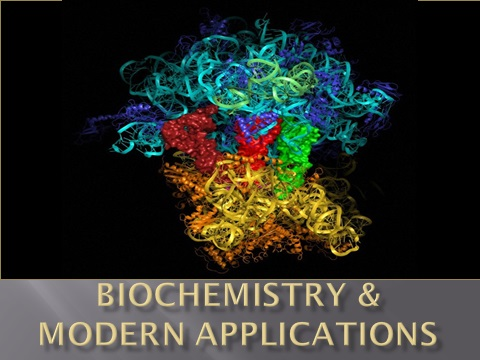
Biochemistry a sub discipline of both biology and chemistry can be divided in three fields; molecular genetics, protein science and metabolism. Over the last decades of the 20th century, biochemistry has become successful in explaining these processes in the living organisms. Biochemical methodology and research covers and develops almost all the areas of life sciences. Understanding of how biological molecules give rise to the processes which occur within living cells and between cells is mainly focused by biochemistry. The study and understanding of tissues, organs, and organism structure and function is also greatly related to biochemistry.
Researchers, authors, reviewers, and readers can use this page to find journal resources connected with ELISA- Enzyme-linked immunosorbent assay, including published articles, related academic topics, current issue content, archive material, and manuscript submission information.
Related article links for ELISA- Enzyme-linked immunosorbent assay will appear here as matching content is published in Biochemistry and Modern Applications (ISSN: 2638-7735). Readers can also browse the journal archive and current issue for connected research.